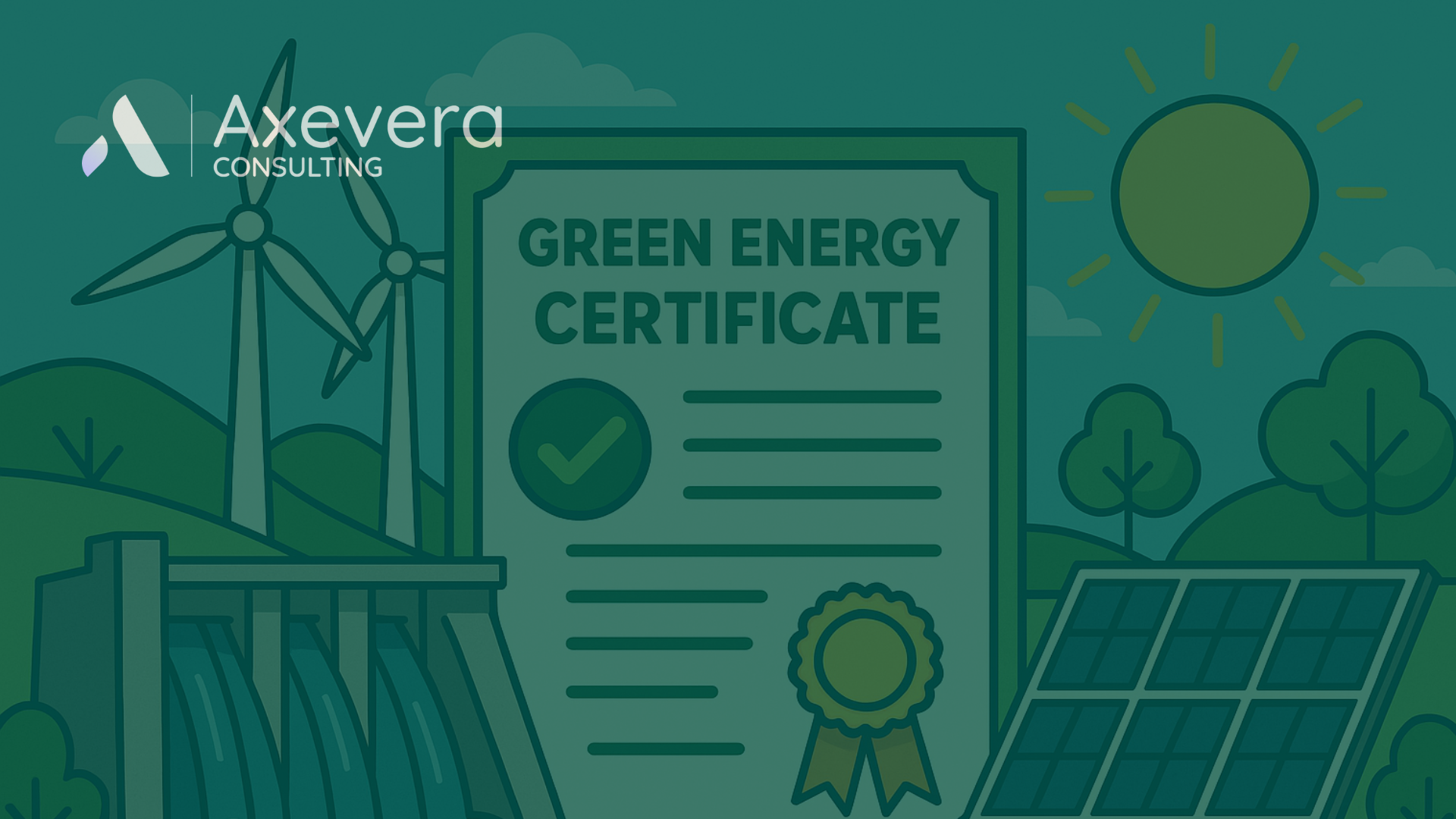
A Green Energy Certificate, also known as a Renewable Energy Certificate (REC), is an electronic document that certifies the production of a specific amount of megawatt-hours (MWh) of energy generated from renewable sources such as the sun, wind, water, biomass, or geothermal energy.
According to the European Commission (JRC) and the US EPA, this instrument does not represent the physical energy itself, but rather its environmental value. Anyone who purchases a Green Certificate can claim the use of renewable energy, thereby contributing to emission reduction and the promotion of green energy.
In practice, the Green Energy Certificate separates the physical flow of electricity from its “green” attributes, creating a dedicated market for clean energy traceability.
How the Green Certificate Works
Every time a wind, solar, or hydroelectric plant generates electricity, a digital certificate is issued and recorded in a national or European electronic registry.
These registries ensure transparency and traceability, preventing double counting.
The producer can sell the certificate separately from the energy, obtaining an economic incentive.
As explained by Resource Solutions, the buyer then gains the right to claim that part of their supply comes from renewable sources.
When the certificate is “retired”, it can no longer be resold, ensuring the integrity and environmental credibility of the system.
Renewable energy certificates, such as Guarantees of Origin (GO), can be purchased either directly on the market or through specialized brokers.
Direct access is usually reserved for qualified operators, such as producers or large energy consumers with the technical and administrative expertise to operate on the Environmental Market managed by the GME.
Smaller consumers or companies can rely on brokers or intermediaries who simplify market access by offering consultancy, document management, and customized solutions.
Alternatively, it is possible to request from one’s energy supplier a contract guaranteeing a 100% renewable energy supply, certified through Guarantees of Origin, making it easier to adopt sustainable practices without operating directly in the energy market.
Types and International Validity
Various types of Green Certificates exist worldwide: in the United States, they are known as RECs (Renewable Energy Certificates), while in Europe, the Guarantees of Origin (GoO) system is used, as defined by the EU Renewable Energy Directive.
Globally, Energy Attribute Certificates (EACs) make it possible to trade clean energy between countries.
All these mechanisms share the same goal: to support the energy transition by creating a reliable market for the production and responsible consumption of renewable energy.
Benefits and Limitations of Green Energy Certificates
Green Certificates are a powerful incentive for renewable energy development, helping businesses and citizens reduce their carbon footprint.
For companies, these certificates are used to reduce Scope 2 emissions in the Market-Based calculation approach.
According to the GHG Protocol, the location-based method calculates Scope 2 emissions using the average emission factor of the national or regional energy mix, regardless of the supplier. This reflects the average environmental impact of the electricity available in the grid.
Conversely, the market-based approach considers the organization’s contractual choices, such as purchasing renewable electricity certified through Guarantees of Origin (GO). In this case, emissions may be significantly lower—potentially close to zero—if the purchased energy is fully renewable and certified.Additionally, renewable energy certificates allow organizations to demonstrate verifiable commitment to environmental sustainability and energy responsibility. However, according to the EPA, purchasing a certificate does not always guarantee new production capacity; it may simply certify the “green” origin of existing energy.
Nevertheless, when managed transparently and integrated into strong energy policies, the Green Energy Certificate remains a key tool for achieving decarbonization goals and promoting a cleaner, fairer, and more competitive energy future.