
On 11 May 2023, the Government of the Czech Republic submitted a bill for a consolidation plan for public finances intending to reduce the state deficit. On Friday, 13 October 2023, the Chamber of Deputies approved the consolidation plan, which will now have to go through the Senate for approval.
Below is a summary of the possible changes that would lead to fiscal impacts on companies from 2024 onwards.
Direct Taxes
Amendments for legal entities
- Increase of the corporate income tax rate from 19% to 21%.
- Accounting in EUR, USD, GBP: as of 1/1/2024, companies with most of their transactions in one of these three foreign currencies will be able to choose to keep their accounts in the functional currency and at the same time file tax returns and pay taxes in these currencies.
- Unrealised foreign exchange gains will no longer be taxable: only realized foreign exchange transactions will be taxable.
- Limitation of tax deductibility for car purchases: the purchase costs of a company car may be deducted up to the amount of CZK 2 million.
Amendments for natural persons
- Lowering of the threshold for the application of solidarity tax: a 23% rate will be applied on the income of natural persons starting from a gross annual taxable income of CZK 1,452,000 (the current threshold is CZK 1,935,600). This means that on the first taxable income bracket, up to CZK 1,452,000, a 15% rate will be applied, above this threshold a 23% rate will be applied on the difference in taxable income.
- Restrictions on capital gain exemptions for the sale of company shares: the current exemption for income from the sale of securities up to CZK 100,000 is maintained. The new limitation of the exemption of capital gains from the sale of securities or shares in a company, which may come into force as of 2025, is set at CZK 40,000,000, again with the requirement of a holding period of 3 years or 5 years between acquisition and sale, depending on the type of securities exchanged (shares or units).
- Limitation of tax deductions: the tax deduction for a dependent spouse will only be applicable if the spouse looks after the child up to the age of three; tax deductions for children’s kindergarten enrolment will be canceled; the tax rebate for working students will be canceled.
- Abolition of the exemption of non-monetary benefits and certain cash benefits: all previously tax-exempt non-monetary benefits (fringe benefits) provided by the employer to the employee will be exempt from personal income tax only up to a value equal to half of the average salary in a tax year.
Social Security and health insurance
- Re-introduction of employee health insurance at a reduced rate of 0.6% on the employee’s gross salary.
- Adjustment of the minimum insurance premium for the self-employed: the contribution for the self-employed will be increased – gradually between 2024 and 2026 – from 25% to 40% of the average monthly salary.
- Increase in insurance premiums for the self-employed: the calculation parameter for the contributions to be paid by the self-employed for pension insurance and the contribution to the state employment policy will increase to 55% instead of the current 50% of the tax base.
Indirect Taxes
Value Added Tax (VAT)
- Unification of reduced VAT rates: the VAT system will be simplified by merging the 10% and 15% VAT rates into a single reduced rate of 12%. The current three rates will thus be reduced to just two rates:
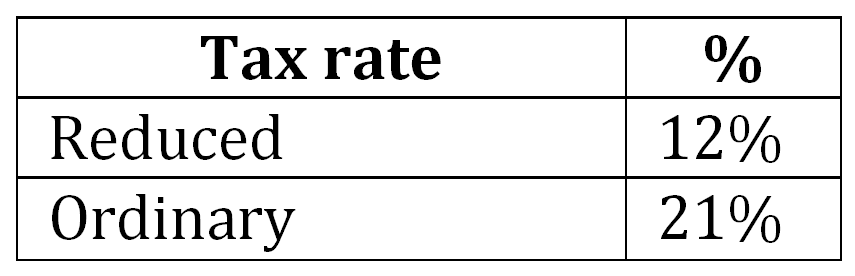
- Reclassification of certain services and goods from the reduced to the ordinary VAT rate: the following categories will be switched to the ordinary rate: non-alcoholic beverages, draught beer, services for authors and artists, collection – transport and storage of municipal waste, repair of shoes – leather goods and bicycles, cleaning work, firewood, and newspapers.
Other taxes and fees
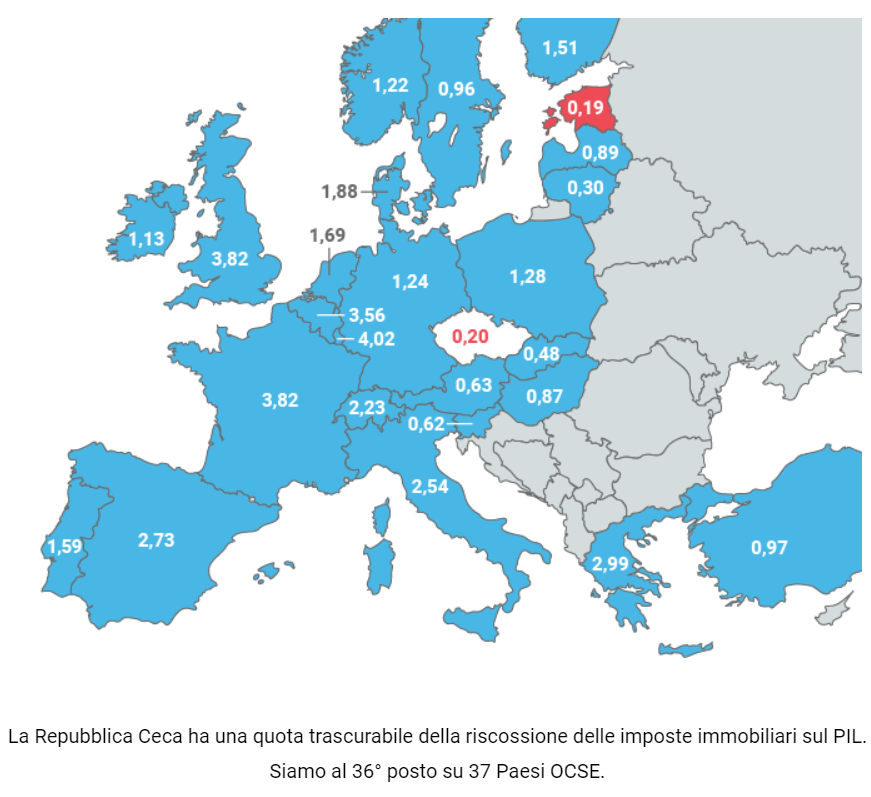
- Property tax on real estate: the tax imposed on the ownership of real estate will be increased. The rates will increase so that the tax will be approximately 1.8 times higher than at present, with the aim of leaving 100 percent of the tax revenue to the municipalities. The estimated additional revenue from the implementation of this tax increase will be SEK 10 billion.
- Motorway vignette price increase: motorway vignette increase of CZK 800, will be CZK 300/year from 1 March 2024, and the introduction of an adjustment scheme reflecting the level of inflation.
Excise
- Mineral oil tax: increase of excise duty on diesel fuel by CZK 1.5/liter, abolition of the exemption from excise duty on aviation fuel for domestic flights, introduction of reimbursement of green diesel fuel according to regulations.
- Tax on tobacco products: introduction of a regular 10% tax increase on cigarettes, smoking tobacco, cigars, and cigarillos in 2024 and 5% each year between 2025 and 2027; introduction of a regular 15% tax increase on heated tobacco each year from 2024 to 2027; introduction of a new excise tax on nicotine sachets and refills for electronic cigarettes.
- Alcohol tax: 10% increase in 2024 and 5% each year between 2025 and 2027.
Sources: https://www.mfcr.cz/cs/; https://www.camic.cz/it/
Image sources: https://www.mfcr.cz/cs/
Graphic sources: https://storyset.com/


